
Our 7 Podcast Mic Picks, Sorted by Budget and Type.
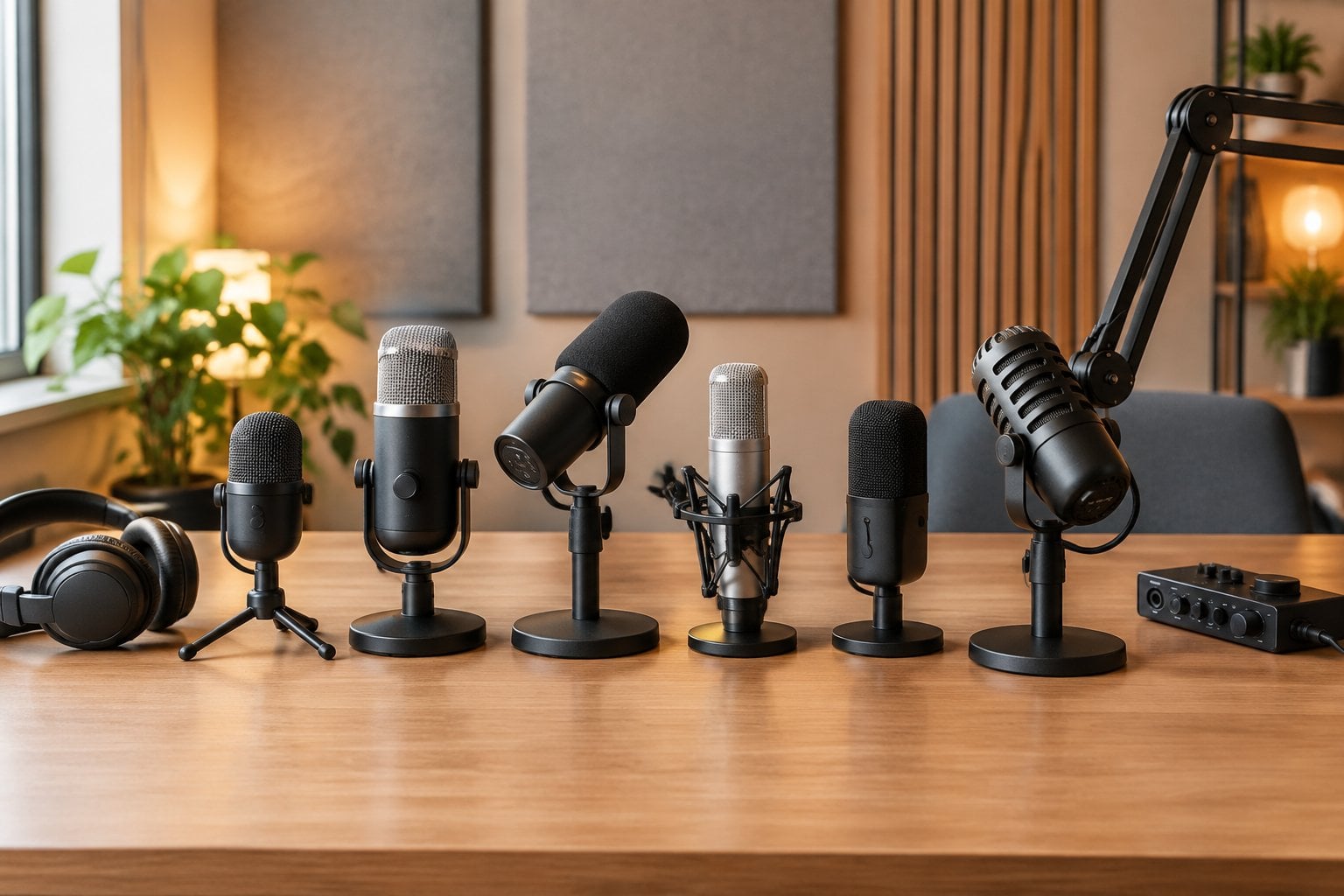
For most new podcasters, the Audio-Technica ATR2100x-USB is our top pick. This dynamic mic gives you USB and XLR outputs, so you can use it right away and connect it to a mixer or interface when you’re ready to upgrade. The other six picks cover tight budgets, mid-range upgrades, and studio-grade setups.
| Pick | Tier | Connection | Mic type | Best for |
|---|---|---|---|---|
| Fifine K669B | Budget | USB | Condenser | Very tight budgets |
| Samson Q2U | Budget | USB + XLR | Dynamic | Beginners who want room to grow |
| Audio-Technica ATR2100x-USB | Budget | USB + XLR | Dynamic | Best all-around starter |
| Rode PodMic USB | Mid-range | USB + XLR | Dynamic | Home studios wanting a broadcast tone |
| Shure MV7+ | Mid-range | USB + XLR | Dynamic | Solo hosts and streamers |
| Shure SM7B | High-end | XLR | Dynamic | Pro studios with a strong preamp |
| Rode Wireless GO | Specialty | Wireless | Clip-on | Interviews on the move |
Low-Cost Starter Mics
Three podcast microphones stand out when money’s tight. The Audio-Technica ATR2100x-USB connects to your computer by USB and has an XLR jack for future upgrades. It also has a headphone jack, so you can hear yourself without delay.
The Samson Q2U takes the same approach. This dynamic mic has USB and XLR outputs, making it a smart, flexible first buy.
The Fifine K669B costs the least of the three. It’s USB-only and uses a condenser design, so it picks up more room sound. In a quiet, soft room, it sounds better than you’d expect for the price.
Mid-Tier Upgrades
Mid-range podcast mics can give your voice a more polished sound. The Rode PodMic USB and the Shure MV7+both offer USB and XLR connections, along with a richer, fuller tone than starter mics.
The MV7+ also includes software to help you set your levels. That’s handy for solo hosts who’d rather not fiddle with settings.
Many mics in this price range come with a built-in pop filter or sturdy mount. Those extras reduce harsh “p” and “b” sounds and keep the mic steady while you talk.
Premium Studio Picks
The Shure SM7B is a classic high-end podcast microphone. This XLR dynamic mic delivers a smooth, warm sound and does a good job of rejecting room noise.
It needs plenty of gain, though. Plan to use an interface with a strong preamp, or add an inline booster such as a Cloudlifter.
High-end mics may also include bass roll-off and presence boost switches. Use them to shape the sound for your voice and room. Their metal bodies and sturdy builds can stand up to years of daily use.
Plug-and-Play USB Options
USB mics are the easiest way to start podcasting. Plug one into your laptop, select it in your recording app, and start talking. You won’t need an interface or extra cables.
Many include a gain knob, mute button, and headphone jack. Some even offer built-in noise reduction. Browse more options in our USB microphones collection.
USB mics are usually small and light, too. A mic and short cable fit in a laptop bag, so you can easily record at a friend’s place or in a hotel.
XLR Mics for Pro Setups
XLR mics connect to an audio interface or mixer. You’ll pay more up front, but you’ll get greater control over your sound.
XLR connections use balanced audio to reduce hum and interference over long cables. Manufacturers also build these mics to handle daily use in studios and on live stages.
You don’t have to spend big to get started. Hybrid mics like the Q2U let you switch from USB to XLR without buying a new mic. See our XLR microphones page for more options.
Dynamic Mics for Real Rooms
Dynamic mics suit most home podcasters. They focus on what’s right in front of them, so a noisy fridge or barking dog is more likely to stay in the background.
They also handle loud voices without distortion. Even when your co-host laughs loudly, the sound stays clean.
Dynamic mics don’t need phantom power, and they usually cost less than condensers of similar quality. That’s why six of our seven picks use dynamic capsules.
Condenser Mics for Detail
Condenser mics capture fine detail and a wide range of high and low frequencies. That makes them a good fit for voiceover, singing, and shows with music.
The catch? They pick up everything. In an untreated room with hard walls, they capture echo and outside noise. Add rugs, curtains, or foam panels before relying on one.
Most XLR condenser mics need 48V phantom power from your interface. Browse our condenser microphone picks if you record in a quiet room.
Take-Anywhere Mics
Portable mics suit podcasters who record in different places. Look for a model that’s small, works with a phone or laptop, and sets up in under a minute.
Some include a windscreen or noise reduction for recording in cafés or outdoors. A foam cover is an inexpensive add-on that cuts wind and breath noise.
Portable mics come at every price point. The ATR2100x and Q2U both travel well because they’re light and only need a USB cable.
Clip-On Lavalier Mics
Lavalier mics clip to your shirt, leaving your hands free and keeping the mic out of sight. They work well for video podcasts and sit-down interviews.
Most lav mics are omnidirectional, so they pick up sound from every direction. Your voice stays steady even when you turn your head.
They connect to cameras, phones, and recorders. Clip the mic about a hand’s width below your chin, away from jewelry and collars that might rub.
Headset Mics
Headset mics combine headphones and a microphone in one piece. The mic stays the same distance from your mouth, which helps keep your volume even.
They’re handy if you move around, use your hands while talking, or game and stream. You can gesture freely without drifting away from the mic.
Prices range from cheap gaming headsets to pro broadcast models. For podcasting, choose one with a boom mic rather than a microphone built into the earcup.
Shotgun Mics
Shotgun mics are highly directional. They focus on sound in a narrow area in front of them and reject sound from the sides.
That makes them useful for video shoots, where the mic sits on a camera or boom just out of frame. Aim one at the speaker to help reduce background noise.
For a seated, audio-only podcast, a dynamic mic close to your mouth usually works better. Shotguns shine when you need to keep the mic out of the shot.
Wireless Mics
Wireless mics free you from cables. Our pick is the Rode Wireless GO, a small clip-on transmitter that sends audio to a receiver on your camera, phone, or computer.
Systems with two transmitters let you record a host and guest at once. Charge everything before each session, and keep the receiver in clear view of the transmitters.
Find more options on our wireless microphones page.
Studio-Grade Mics
Studio mics are built for a fixed spot on a boom arm in a treated room. The SM7B is a familiar example in the podcast world.
These mics reward a good setup. Pair one with a quality interface, a sturdy boom arm, and closed-back headphones.
If your room is untreated, start by controlling the sound. Even a great mic can sound echoey in an echoey room.
Phone-Ready Mics
Smartphone mics plug into your phone’s USB-C or Lightning port. They give you a big jump in audio quality over the phone’s built-in mic.
They work well for quick interviews, field clips, and short social videos. Some USB mics, including the ATR2100x and Q2U, also connect to phones with the right adapter.
Turn on airplane mode while recording. That keeps calls and alerts from cutting into your audio.
Field Recorders
Field recorders are compact, battery-powered devices that capture audio without a computer. Many include built-in mics and XLR inputs for external microphones.
When shopping, compare size, sound quality, number of inputs, battery life, and price. Most field recorders save audio to a memory card in several formats.
They also make a handy backup. Record to a field recorder and your computer at the same time, and you’ll still have a copy if one device fails.
Desk Mics
Desktop mics sit on a small stand on your desk. Most USB microphones, including the Fifine K669B, come with one.
The downside? Desk stands can pick up taps, bumps, and keyboard noise. A boom arm or shock mount can help, and it lets you bring the mic closer to your mouth.
Leave about a fist’s width between your mouth and a dynamic mic. Speak slightly across the top of the mic to reduce pops.
Two-Mic Bundles
Dual mic sets are designed for podcasts and shows with two people. They can save money while giving both voices a similar sound.
Many bundles include two USB or XLR mics, plus stands and cables. Wireless kits like the Rode Wireless GO also come in versions with two transmitters.
For a pair of XLR mics, you’ll need an interface with two inputs. Record each mic on its own track so you can adjust each person’s levels during editing.
Final Thoughts
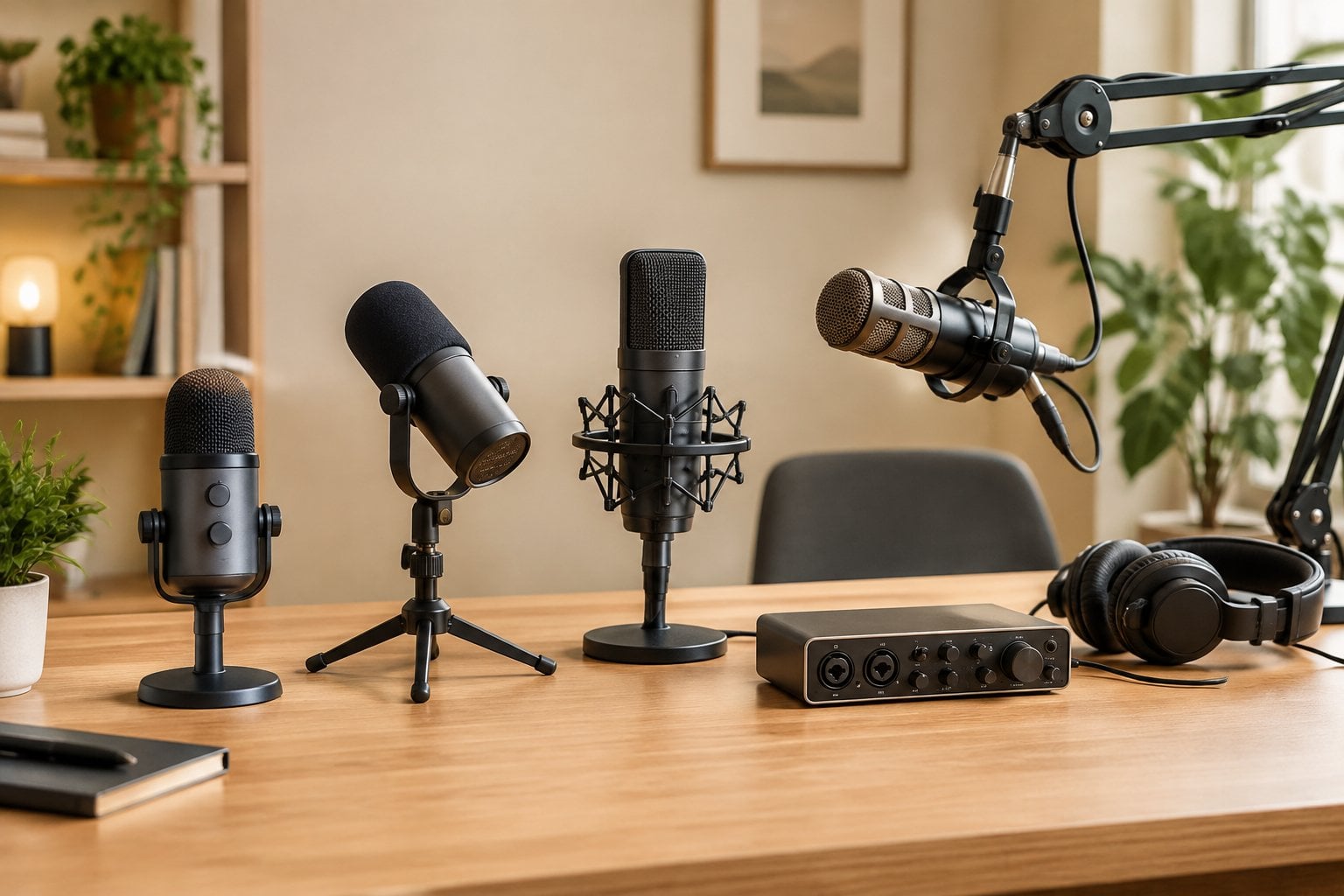
If you’re new to podcasting, start with the Audio-Technica ATR2100x-USB or Samson Q2U. Their USB and XLR outputs leave room to grow. Choose the Fifine K669B for a low-cost option, the Rode PodMic USB or Shure MV7+ for a mid-range upgrade, or the Shure SM7B for a full studio setup.
For interviews on the move, choose the Rode Wireless GO. Looking for more options? See our 17 best podcast microphone recommendations, and browse our reviews for more podcast gear.
Podcast Microphone Questions and Answers
Which podcast microphones suit beginners on a budget?
The Audio-Technica ATR2100x-USB and Samson Q2U are great options for beginners, and both offer USB and XLR outputs. If your budget’s really tight, try the Fifine K669B.
What extras come with mid-range podcast mics?
Many mid-range podcast microphones include built-in pop filters, sturdy mounts, and software to adjust levels. These features tame harsh sounds and help keep your voice clear.
Why pay for a high-end podcast mic?
High-end podcast mics deliver a richer tone, sound-shaping switches, and durable builds that can last for years. Many need a powerful preamp to sound their best.
Why do so many podcasters use USB mics?
USB podcast mics plug straight into a computer and are easy to carry around. Many also include gain controls and a headphone jack.
What makes XLR mics popular with pros?
XLR mics use balanced audio to block hum and noise. They’re durable, too, and connect to interfaces and mixers for greater control.
What are the benefits of dynamic mics?
Dynamic mics reject room noise and handle loud voices without distortion. They don’t need phantom power, either, so they’re a good fit for most home recording spaces.
When should a podcaster choose a condenser mic?
Choose a condenser mic for a quiet, treated room or a podcast with music and singing. It captures fine detail and a wide range of sound.
What are portable mics good for?
Portable podcast mics are made for recording away from home. They’re small, quick to set up, and often include noise reduction.
Why use a lavalier mic?
Lavalier mics are small and clip onto clothing. They pick up sound from all sides, making them ideal for podcast interviews and video.
What should you look for in a field recorder?
Check the recorder’s portability, sound quality, inputs, battery life, and price. Many field recorders have built-in mics and save audio in several file formats.
Related posts:
 Discover 17 top podcast microphone options suitable for every budget, helping you find the perfect gear to bring your audio to life. Whether you’re just starting or a seasoned host, there’s a great choice here for you!
 Secrets Revealed: The Top Tools for Productivity, Organization, and Money-Making for Gig Workers, Freelancers, and Remote Workers.
 10 High-Income Side Hustle Ideas and Profitable Virtual Assistant Opportunities for Stay-at-Home Moms!
 10 Realistic Side Hustles You Can Start This Weekend to Boost Your Income in 2025